
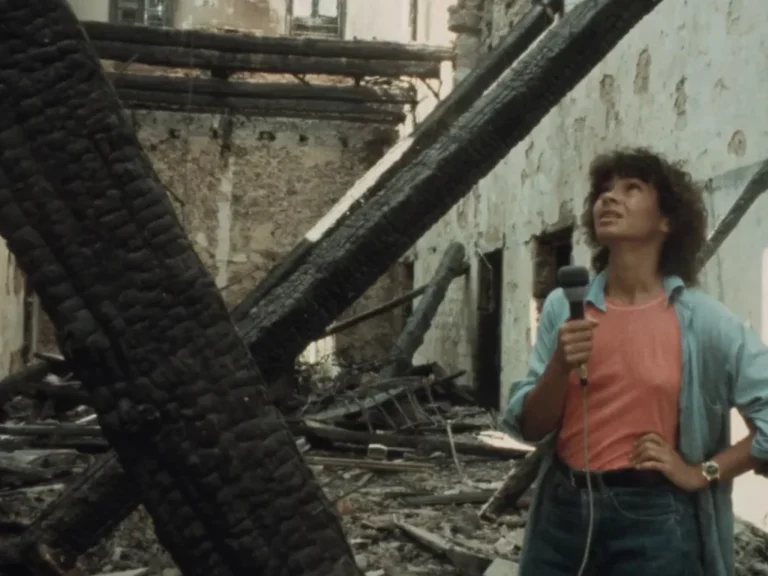
As Lebanon endures fresh rounds of bombardment, Jocelyne Saab’s films feel particularly urgent. Her Beirut Trilogy weaves together documentary insight and personal testimony to trace a city fractured by war across three decades.
Saab, a Beirut-born journalist who spent years reporting from Paris, returned home to document how violence reshaped everyday life. The trio—Beirut, Never Again (1976), A Letter from Beirut (1978), and Beirut, My City (1983)—renders Lebanon’s civil strife as a human story, not just a political chronicle.
Beirut Trilogy: A quick guide
Beirut, Never Again opens amid chaos, using stark imagery of ruined streets and a narrator who mourns the Beirut that once was while acknowledging the violence that now defines the city. The film contrasts faded grandeur with the grit of daily life, offering a poetry of memory rather than a ledger of losses.
In A Letter from Beirut, Saab follows ordinary commuters as they navigate buses and frontlines, letting conversations reveal the strain of war on family, work, and home. The camera shifts across the city’s partitions, capturing people who tell of college plans derailed, houses destroyed, and loved ones abducted.
Beirut, My City returns to the present moment, depicting a city still living with danger while foreshadowing future tragedies. The documentary’s footage, shot before a violent atrocity, becomes a meditation on foreknowledge and the ways memory intercepts the present.
Taken together, the trilogy treats conflict as an intimate, ongoing force that shapes speech, routines, and hope. Saab’s method blends documentary realism with a personal lens, producing work that names oppression while honoring the resilience of those who endure it.
By 2026, Saab’s voice resonates against new rounds of fighting in the region. The current cascades of violence and displacement echo the patterns traced in her films, underscoring how history can loop back on itself. Yet the films also celebrate stubborn human connections and the stubborn impulse to remember in order to insist on accountability.
One quiet moment from A Letter from Beirut—a warm embrace on a moving bus—reminds viewers that friendship can outlast even the fiercest upheaval. Saab’s Beirut Trilogy insists that life persists amid ruins, and it leaves us with a difficult question: what comes after may resemble the past, or it might hint at a different path if people choose to see clearly through the wreckage.
Source: Original article