
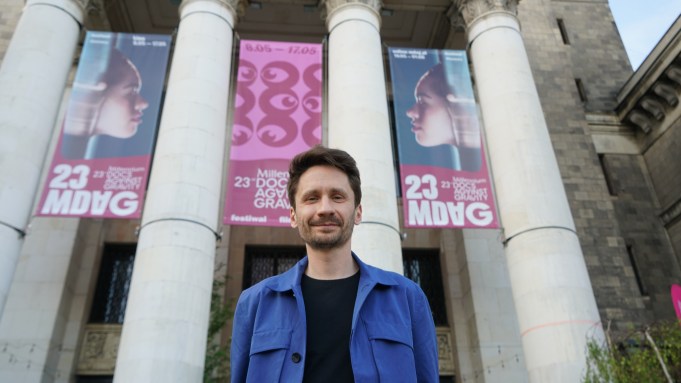
Karol Piekarczyk, the artistic director of Millennium Docs Against Gravity, challenged Wim Wenders’ call for filmmakers to stay out of politics, arguing that the critic’s stance targets the sentiment rather than the person.
He maintains that defending basic human rights isn’t a partisan issue and that documentary storytelling is driven by necessity and personal experience. Topics aren’t picked from a menu; creators pursue intimate stories that illuminate broader injustices, such as Alisa Kovalenko’s Traces, which centers on sexual violence and its impact.
Film as a space for conviction
MDAG will stand behind its filmmakers, he says, because audiences expect a sense of community and purpose in a world troubled by inequality. Dialogue about difficult subjects is essential, and the craft itself hinges on engaging with those realities.
Funding climate and independence
MDAG’s main sponsor, Millennium Bank, has supported the festival even when works critique capitalism. Piekarczyk notes the partnership has allowed programming with integrity and without pressure from political forces, contrasting with some government-funded venues elsewhere.
Festival footprint and timeline
MDAG spans seven Polish cities—Wroclaw, Gdynia, Katowice, Poznań, Bydgoszcz, Łódź, and Warsaw—and attracts growing crowds, with admissions in the hundreds of thousands in recent years. The festival runs in person through May 18, followed by online programming from May 19 to June 1.
Wenders’ Berlinale remarks and the broader debate about politics in art frame this year’s conversations, but Piekarczyk emphasizes that the festival’s core is collaboration between bold filmmakers and an engaged audience.
Source: Original article