
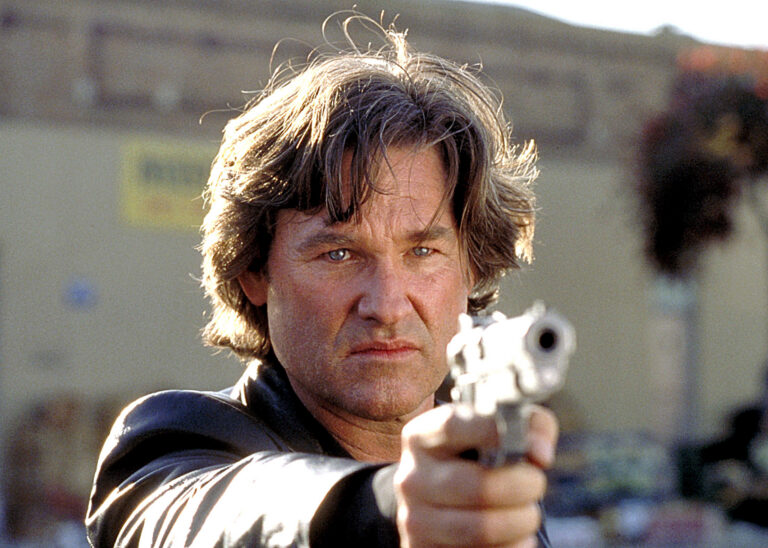
In Ron Shelton’s Dark Blue, Kurt Russell delivers a performance that reframes his career-long ease as a loaded weapon. He plays Eldon Perry, a Los Angeles detective whose charm masks brutal flaws, a portrayal set against the social tremors of the Rodney King era.
Russell’s ease has long defined his appeal across genres—from coastal comedies to gritty thrillers—but here it’s harnessed to reveal a moral rot that’s hard to ignore. His Perry feels both human and condemnable, drawing you in while forcing you to confront what he justifies in the name of order.
The film leans into noir poise: Shelton’s widescreen framing places Perry inside a corrupt network while isolating him from the city he polices. The visual design, paired with a tense, layered script, makes the character feel like a living contradiction—confident, funny, and increasingly trapdoor‑thin.
Dark Blue began as a James Ellroy treatment, The Plague Season, which David Ayer shaped into screenplay form. The result is a Peckinpah‑tinged meditation on power and law, where law enforcement becomes a arena for ugliness and ambiguity rather than clarity.
The supporting cast helps sharpen the lead’s ferocity. Lolita Davidovich portrays Perry’s wife in a few pivotal scenes that carve out the domestic cost of his habits, while Scott Speedman plays his impressionable partner and Brendan Gleeson brings a corrupt supervisor to life. Their presence deepens the film’s meditation on loyalty, betrayal and the toll of corruption.
As a contrast, the movie’s moral center isn’t a sermon; it’s a character study that makes the audience question what constitutes heroism. Russell’s performance invites sympathy even as the character’s actions pull him toward ruin, a balance that makes Dark Blue linger long after the credits roll.
When compared to Denzel Washington’s turn in Training Day, Russell’s Perry feels leaner and more morally compromised, which can feel riskier and more unsettling. The film isn’t shattering in the way that more overt villains are, but its quiet ugliness becomes more harrowing through Russell’s restraint.
In new light, Shelton’s film is also a showcase for its technical team. Barry Peterson’s noir‑tinged cinematography frames a city that’s beautiful and dangerous in equal measure, while a restoration and bonus materials in Imprint’s 4K UHD/Blu‑ray edition expand the conversation with new interviews and archival pieces.
The legacy of Dark Blue rests on Russell’s performance, a masterclass in balancing charm with a spiraling moral collapse. It remains a rare glimpse of an actor who can be both likable and deeply troubling on screen.
Source: Original article