
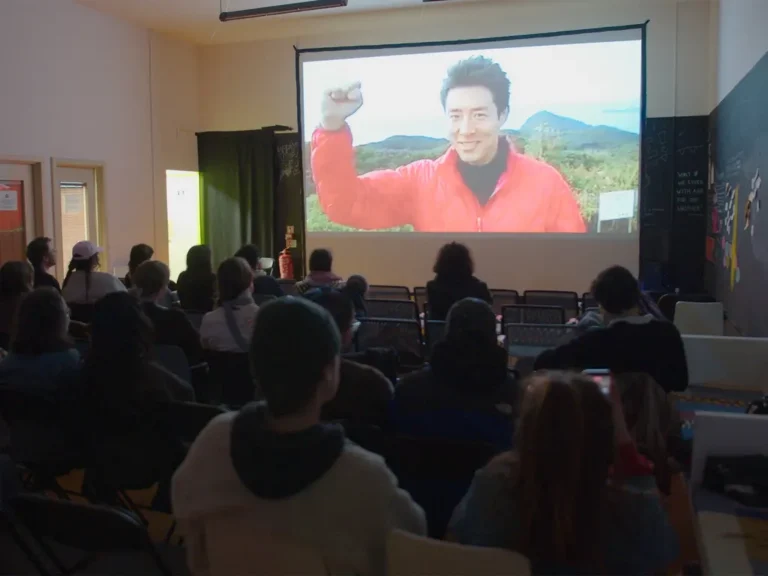
A midnight crowd gathered in Kentish Town for a 24‑hour cinema experiment staged by Dan Wilkinson’s Double Wonderful. The aim was simple yet radical: run a continuous program with no fixed start time and no upfront reveal of titles, inviting patrons to come, linger, or leave as they wished.
The project treats the screening space as a living experiment in spectatorship, where no film is promised and energy is fueled by the people in attendance. Over the course of the night, roughly 160 cinema‑goers moved through the room, each shaping the atmosphere in their own way.
Arriving around 10pm, I found a quiet, almost library‑like hush. By the stroke of midnight the place hummed with a different kind of rhythm: drinks were opened, voices rose and fell, and the screen showed Brian De Palma’s Hi Mom! as a backdrop to a chorus of reactions from the aisles.
The lineup mixed familiar titles with lesser‑seen curiosities. François Ozon’s X 2000 appeared without ceremony, joined by Boris Gerrets’ People I Could Be And Maybe Am, Sion Sono’s Bad Film, and Arran Ashan and Mustafa Mohamoud’s 6 Till 6 — each chosen as a “filmic orphan” that might not have found a traditional release otherwise.
Double Wonderful’s manifesto leaned into cold openings, asking audiences to surrender control of their viewing experience. The absence of forthcoming titles encouraged a playful spontaneity, prompting moments of surprise and shared discovery rather than pre‑planned devotion to a schedule.
In this space, the event became a hybrid of cinema and community hub, a temporary stage for an improvised social sculpture. Attendees like Kleo—the night’s steady presence—described the venue as a sanctuary for the day’s rejects, while others joined and left at different hours. A collaborator named Jude rode the full 24 hours on a single can of Monster, savoring the project’s messy, uncertain energy and the conversations that spilled onto the street during breaks.
Yet the project also highlighted a practical headache: London’s nocturnal infrastructure isn’t built for 24‑hour cultural spaces. By the early hours, street life faded, pubs closed, and late‑night convenience spots were scarce. Wilkinson noted the obstacle in a wry aside about a local Gregg’s that wouldn’t stay open, underscoring a larger question about turning a city into a true 24‑hour night‑culture hub.
Ultimately, the experience read like a performance about how we occupy public spaces and how much control we’re willing to cede to a crowd. It invites reflection on cinema etiquette and whether friction with fellow viewers is an inseparable part of communal watching, or simply a barrier to be overcome.
Source: Original article