
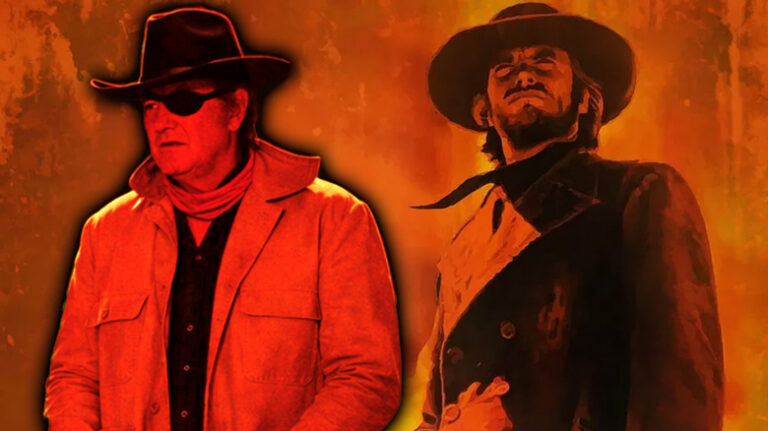
In the annals of Western cinema, talk of a joint project pairing Clint Eastwood with John Wayne captured imaginations as a symbolic bridge between two eras. Plans for a film called The Hostiles circulated, promising a clash and eventual collaboration that would have signaled a turning point for the genre. Yet behind the scenes, misgivings and differing visions kept the idea from ever taking shape.
Wayne and Eastwood loomed as the archetypes of old‑school Hollywood and the revisionist edge, respectively. They never shared the screen, and their relationship grew tense as negotiations unfolded. Eastwood later recalled a moment when Wayne invited him to pursue a project together, a spark that never became a film.
Screenwriter Larry Cohen drafted a script in 1970 that pitched Eastwood as a risk‑taking gambler who ends up with Wayne’s veteran rancher. Eastwood sent a copy to Wayne with a note hinting at potential, but Wayne replied with a blunt refusal. Eastwood pressed for a version that would honor both personas, but Wayne’s response hardened, and the project stalled.
As years passed, the tension around The Hostiles intensified. Wayne’s ire toward Eastwood’s darker, morally thorny approach resurfaced in a notorious letter about Eastwood’s High Plains Drifter, and the project never recovered. Cohen later described the back‑and‑forth as a tug‑of‑war between two generations who could not find a common language.
Decades later, The Hostiles reemerged in a different form: Hallmark produced a TV movie in 2009 called The Gambler, the Girl, and the Gunslinger, a lighter take inspired by Cohen’s story. Cohen expressed disappointment that Wayne and Eastwood never collaborated on the screen, noting the missed opportunity to explore a true passing of the torch.
Meanwhile, Eastwood went on to complete The Shootist in 1976, a film that underscored his evolution as a filmmaker. He even visited Wayne on set during production, a moment that hinted at reconciliation, even as their earlier feud lingered in memory. The pairing fans imagined remains one of cinema’s most enduring what‑ifs.
Today, the unmade project stands as a landmark in the genre’s evolution—an emblem of how two generations might have reshaped the West, had the stars aligned.
Source: Original article