
Paramount’s stance shaped how Star Trek: The Next Generation unfolded. While fans still cite two‑part classics like The Best of Both Worlds, the show largely kept to self-contained episodes, a format favored for syndication and easy viewing out of sequence.
Several writers longed to tell longer stories that stretched across multiple installments. But the studio, led by executive producer Rick Berman, discouraged those ambitions, preferring episodes that could stand alone and be dropped into the weekly schedule without prerequisites.
Worf’s fate and the first crack at serialized ambition
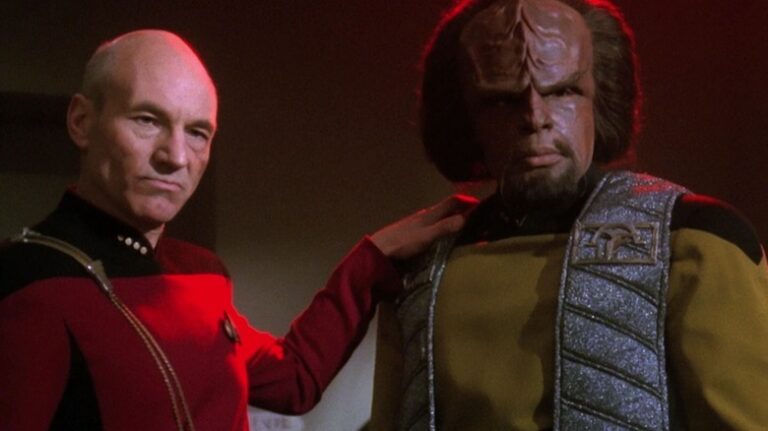
In Season 3, Ronald D. Moore co-wrote Sins of the Father, where Worf confronts a Klingon father’s crimes and ends up excommunicated. That arc opened the door to a continuation, yet Paramount signaled disapproval for open‑ended storytelling. Moore recalls a moment in Rick Berman’s office when the producer asked whether a follow‑up would be necessary, and Moore replied that it would, even as he noted Paramount’s resistance.
“The episode that did break the mold before ‘Family’ was ‘Sins of the Father.’ I deliberately left it open. Worf has lost his honor and leaves. It was pretty clear that eventually you’re going to have to follow that story up. There was a moment in Rick’s office when we’re working on the script when he said ‘Do, we’re going to have to do a follow-up to this, right?’ and I was like, ‘Yeah.’ ‘Paramount doesn’t like that.’ I was ready for him to say you can’t end this way, but he didn’t. He just kind of grumbled and moved on.”
The pattern persisted for a while, but it wasn’t the end of the road for continuity. The saga of The Best of Both Worlds found its own answer in a later tie‑in, giving Picard’s ordeal a fitting consequence without alienating casual viewers.
The turn toward interconnected storytelling
Michael Piller stressed that connecting stories across episodes proved crucial for handling major moments. He cites Family, which follows The Best of Both Worlds, as a case where a personal recovery story sits alongside the wider science fiction arc. Piller also noted that he urged for a connective thread between finales, even if that required adding a science‑fiction subplot to the Earth‑bound narrative.
“When I got to the end of [‘The Best of Both Worlds, Part II’], we made the decision not to extend it. And I called up Rick and said ‘Hey, listen, next week Picard can be fine, but for a who that prides itself on a realistic approach to storytelling, how can how have a guy who’s basically been [assaulted] be fine the next week? There’s a story in a man like Picard who’s lost control.’ Finally, I was persuasive enough to talk Gene [Roddenberry] and Rick into taking the chance.”
In practice, the team evolved a hybrid approach: episodes that stand on their own, yet still leave threads to be picked up later for viewers who follow the wider narrative.
Source: Original article