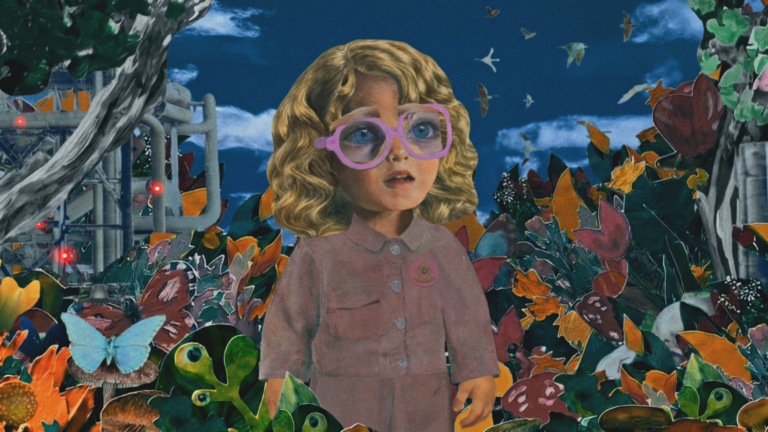
At this year’s Cannes Classics, the festival mixed archival restorations with bold new pieces, including Dustin Yellin’s 15-minute short Goodnight Lamby. The piece, produced by Darren Aronofsky’s Primordial Soup and shot by cinematographer Matthew Libatique, features Paul Rudd portraying a version of the artist and Chris Rock providing a voice for a guiding octopus. The project fuses live action, photography, collage‑style animation and Google Veo 3 imagery to bring Yellin’s sculptural world to life on screen.
Head animator Ricardo Villavicencio led the team, with production from Villavicencio Studio and 100 Zeros. The animation creates a sweeping underwater landscape that expands the glass‑based universe, complemented by an acoustic end‑credit song from Maggie Rogers. Yellin has long described his sculptures as frozen cinema, and he treats this film as a natural extension of that idea—motion within still forms.
Aronofsky has been pushing Gen-AI as a storytelling tool, and Goodnight Lamby marks a more integrated, art‑world friendly use of the technology. The project sits alongside other Cannes Classics works that mix tradition with experimentation, signaling a broader embrace of new tools in a festival with a century of history.
With the look and feel of a sprawling topography, the piece leans on Google Veo 3 to animate elements, rotoscope them, and compose the final canvases. Gonçalves and Yellin describe a collaborative process where cinematic instincts meet sculptural sensibility, including casting Paul Rudd as a version of the artist and Chris Rock voicing a talking octopus who guides Zia Yellin through the voyage.
Plans call for ongoing festival appearances with the aim of museum touring, inviting audiences beyond film fans to engage with Yellin’s art through this hybrid medium. Gonçalves notes the work’s potential to broaden how audiences encounter sculpture when paired with digital storytelling tools, and he calls the project’s quality undeniable despite its experimental edge.
Source: Original article