
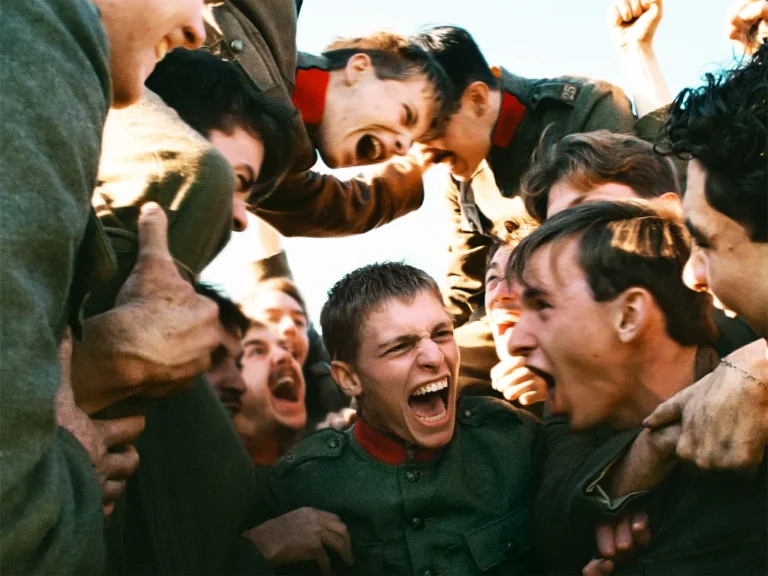
Lukas Dhont’s World War I drama unfolds on the Belgian front, tracing the meeting of two young soldiers who turn to theatre to ease the strain of war.
Pierre, nicknamed Quiet Mouse by his comrades, arrives with a wary resolve to belong. Francis, the troupe’s natural showman, fills the mess with energy as he stages a playful can-can and other stagey moments to lift spirits.
Their connection grows through glances and careful caresses, evolving into a tentative romance that survives the long, grinding days of conflict. The film uses this romance to examine queer belonging against a brutal battlefield backdrop.
Emmanuel Macchia plays Pierre and Valentin Campagne is Francis, both delivering measured, quiet performances that anchor the film’s emotional center. The director’s sense of composition wires intimate moments to the larger war scene, letting the theatre within the story become a counterpoint to violence.
Where Dhont’s previous films courted difficult, explicit discomfort, Coward chooses restraint. That discipline suits the setting and reveals a surprising, character‑driven drama about endurance, loyalty, and the question of what true bravery can look like in a time of war.
Ultimately, the film marks a notable step in Dhont’s storytelling—more confident crafting of mood and feeling, without punishing its characters for their humanity. It nods to his earlier works like Girl and Close while branching into more expansive wartime storytelling.
Source: Original article