
Colony lands in Cannes’ Midnight program as Yeon Sang-ho returns to the undead arena. The director behind Train to Busan brings a fast, escalating setup, but the movie falters even with a clever hive-mind mechanic.
Set inside a Seoul high-rise that doubles as a conference hub and a shopping arcade, the plot kicks off after a vengeful employee at a biotech firm releases a deadly pathogen. Professors Kwon and Han, ex-spouses and colleagues, find themselves among the attendees as chaos spreads and the building goes under quarantine.
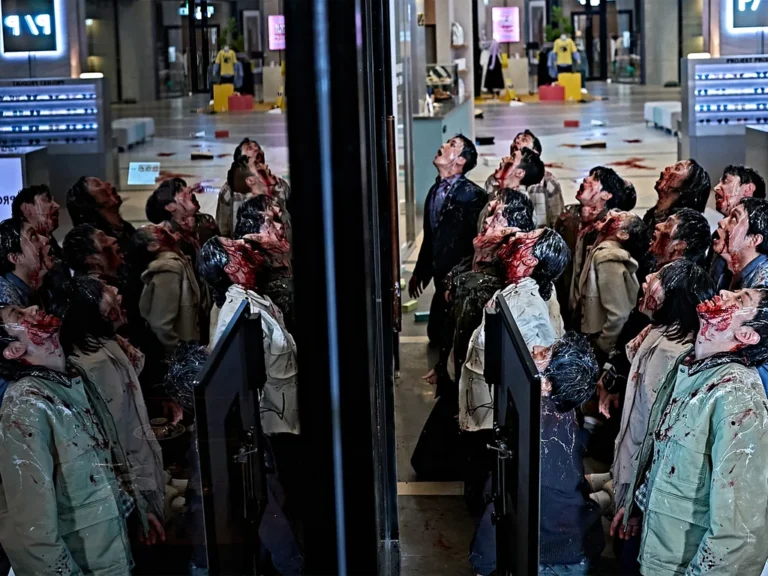
As the infected shuffle through the floors, the film reveals a shared trance among the zombies. When one learns something new, that knowledge can be transmitted to others through the hive mind.
Premise and pacing
The film starts with momentum, pulling audiences into the premise, yet the characters remain thin beyond their genre roles. Kwon is framed as the lead, but we know little about her beyond a stalled marriage; the rest of the group slots into familiar archetypes—the wary officer, the determined underdog, the loud executive, and a tense teen.
Much of the two-hour runtime leans on Seo Young-cheol, the human antagonist who sparks the outbreak. The script piles on lore around the hive mind, but the exposition and predictability sap the suspense.
There are a handful of effective hive-mind sequences and the zombies’ performances are convincingly eerie—haunting expressions and uncanny movements that land in isolated moments. Still, the overall tension never quite takes flight, and the movie feels like a pale echo of Yeon Sang-ho’s earlier triumph.
Verdict
Colony straps a provocative premise and strong creature work to a familiar frame. It’s an earnest bid to rethink zombie dynamics, but the screenplay and character arcs don’t reach the heights of the director’s best work.
Source: Original article