
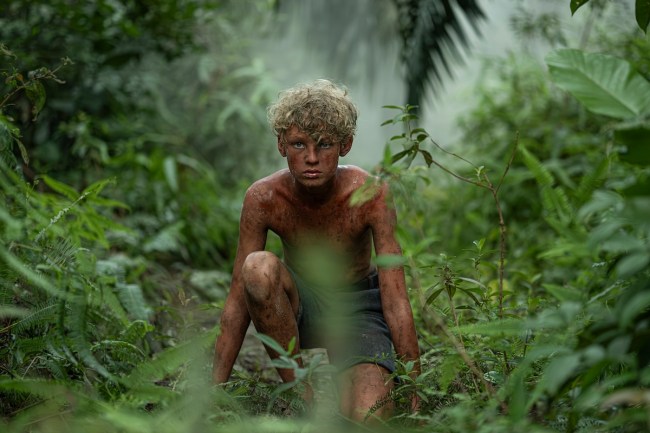
Netflix’s adaptation of William Golding’s Lord of the Flies arrives as a four-part limited series that leans into mood and atmosphere rather than horror. Guided by Jack Thorne’s adaptation, the show treats adolescence as something shaped by environment and parenting, not just primal impulses. The result is earnest and watchable, but it stays within a compact four-hour frame rather than sprawling into a long run.
Centered on four young survivors, the story tracks their attempts to survive and organize after a plane crash. Piggy is the brains, eager to lay out basics like fire and shelter, but he’s not positioned as the true leader. Ralph, with his bright mood and practical aura, naturally steps into a leadership role, while Jack asserts authority with swagger and a ruthless streak. The tension among the trio drives the early dynamics, with Simon offering a quieter, questioning perspective.
Visually, the show leans into striking color and unusual camera work—bright reds and greens, a roaming fish-eye lens that positions the boys as if enclosed in an aquarium. Thorne and director Marc Munden emphasize how grownups’ choices haunt the children, even when adults are absent. Yet this is not a straight horror ride; it’s a measured drama that uses familiar IP to tell a contained story.
Compared to Yellowjackets, the Netflix adaptation is more cautious. It trusts Golding’s text to deliver the shocks, and its four-hour length makes it feel more like a cinematic experiment than a long-form series. It echoes Thorne’s previous four-part effort Adolescence, though it lands as a colder, more restrained counterpart to that show.
Grade: B-. Lord of the Flies debuts on Netflix on May 4, with all four episodes dropping simultaneously.
Source: Original article