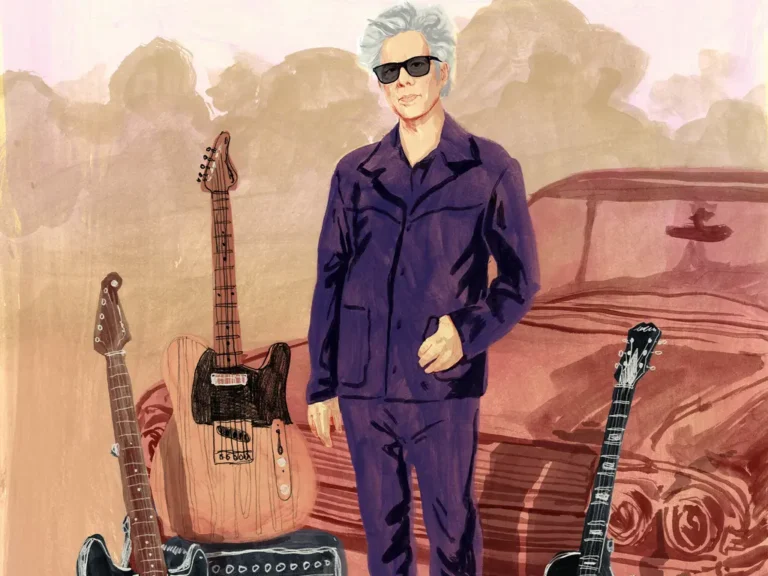
Jim Jarmusch has built a lasting portrait through sound as much as through image, a filmmaker whose career doubles as a study in music‑driven storytelling.
His early work, Permanent Vacation (1980), opens with the rhythm of street life—the boots on pavement, the drone of passing cars, and a saxophone line from a street performer. The score threads together what we hear and what we see, turning a city into a subjective mood rather than a mere backdrop. Bells creep in and haunt the protagonist, hinting at memory and dream in a way that blurs fact and feeling.
More than four decades later, Jarmusch continues to fuse sound with sight, letting rhythm shape perspective across films and collaborative albums. In his most recent project, Father Mother Sister Brother, he writes and performs the score himself, merging guitar swells and synthetic textures to suggest private worlds within domestic rooms. A cameo by Anika, singing a skeletal homage to Dusty Springfield’s Spooky, folds into the ghostly atmosphere as if a memory regressed through time.
Sound as a signature
From his university days and his no‑wave band the Del‑Byzanteens, Jarmusch chased a friction between the material and the atmospheric. The band’s track Lies To Live By, heard on Wim Wenders’ The State of Things, showcases a hook that collapses into a jagged improvisation—a hallmark of his approach to music in film.
As with Mystery Train (1989), the Memphis setting and its soundtrack reveal how a soundtrack can reframe a location. Elvis, Roy Orbison and Otis Redding appear as audible memories while John Lurie’s score underpins the scene, bending rock ’n’ roll toward an uneasy, off‑kilter mood.
In Only Lovers Left Alive (2014), a vampire couple’s Detroit stronghold becomes a gallery of musical echoes. Adam’s soundtrack accompanies a shifting mood, blending live instruments with the work of SQÜRL—Jarmusch’s sludge‑rock project with Carter Logan and Shane Stoneback. Across the film’s twists, the music travels with the characters, becoming a diary of their ongoing tension with the human world.
Jarmusch’s collaborations extend across continents and centuries: Jozef Van Wissem’s lute illuminates Tangier’s old streets, while the band’s post‑apocalyptic mood asserts its own gravity. The interplay of Dutch lute and Western guitar traces the filmmaker’s long horizon, a record of ages lived through sound.
Continued collaborations and a taste for improvisation
SQÜRL, now a duo with producer Logan, has kept pace with Jarmusch’s cinematic tempo. Their 2023 debut Silver Haze leans into a climate of collapse and resilience, where the music’s menace and mood mirror a near‑future tale. Meanwhile, the project with Anika for She Don’t Wanna Talk About It deepens the emotional field under a rain‑filled sky.
Older scores, like Dead Man (1995) with Neil Young, were born from live improvisation, translating Blake’s verse into a looped chorus of guitar and drone. Mulatu Astatke’s Ethiopian‑influenced score for Broken Flowers (2005) channels Don Johnston’s wandering search into a jazz‑inflected corridor of mood, with Yegelle Tezeta guiding his steps across the country.
Ghost Dog: The Way of the Samurai (1999) is another case study in loops: a ritual rhythm that turns memory into action as RZA’s bells and hip‑hop textures echo alongside the samurai’s discipline. The effect is a method—the music becomes a character, trimming the edges of the film’s emotional logic.
Across his body of work, Jarmusch keeps circling back to improvisation and repetition. The idea that a phrase can gain autonomy through repetition—whether in a loop or a verse—anchors the filmmaker’s entire practice. It’s a voice that spans ’50s rock, ’70s no wave, ’90s hip‑hop and ’00s doom metal, all swept together by a patient, contradictory curiosity.
Jarmusch’s project remains a living self‑portrait, where soundtrack and story converse across time and place. The filmmaker’s method—let the cadence lead, then follow—renders his films a continuous experiment in mood and meaning.
Source: Original article