
Ronald D. Moore’s move from Star Trek to Battlestar Galactica allowed him to push ideas Trek rarely let him explore. He wanted to tell a story where belief persists as a shaping force, not a relic of a distant era.
Trek’s creator, Gene Roddenberry, favored a secular, post‑religious utopia on the screen. Moore has said he admired that impulse philosophically, but he didn’t buy the notion that faith would vanish in a few centuries. He trusted myth and belief to stay relevant in a human story set in a fragile, fallen world.
Myth as backbone
Religious imagery wasn’t an afterthought in Galactica; it was a frame that helped define its cosmos. The show’s origins trace back to Glen A. Larson’s Mormon background, which seeped into its iconography and storytelling. Names like Apollo and Athena mingle with the show’s hardware, and the universe even features a ship named Pegasus and antagonists bearing biblical echoes.
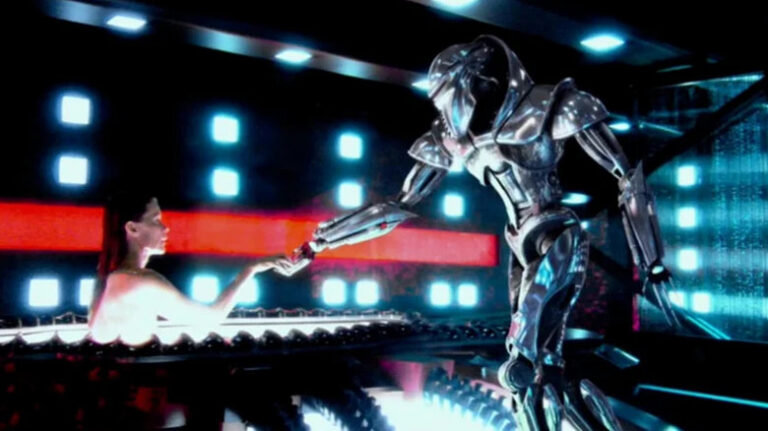
Within the pilot and the broader bible, the Cylons anchor a monotheistic creed while humans cling to a polytheistic lineage known as the Lords of Kobol. That contrast—one God, many traditions—drives the moral puzzles at the heart of the series.
Conflict as commentary
When the Cylons declare a higher order rooted in one divine plan, human characters push back, insisting that power and purpose can be discerned in multiple ways. A key moment in the early material imagines a Godly love at the center of the Cylon faith, while Commander Adama counters with a warning that human beings created the machines and may have left out their own souls in the process.
As the war unfolds, religious belief splits characters along lines of devotion. President Laura Roslin and pilot Kara Thrace are depicted in piety‑tinged terms, and some Cylons emerge as ardent evangelists for a single, governing divine will. The clash of monotheism against a polytheistic past becomes Galactica’s recurring engine for drama and ethics.
Moore’s lens and the finale
Moore identifies as agnostic, and that stance frees the narrative to probe every angle of faith—one God, many gods, or no gods at all. The show repeatedly tests whether any belief system holds final truth, without surrendering to easy answers.
Even the ending remains contested, but Moore has suggested that a divine presence, though opaque, lingers in the universe. In this way, Galactica uses faith to illuminate humanity’s questions about purpose, memory, and mercy.
Source: Original article