
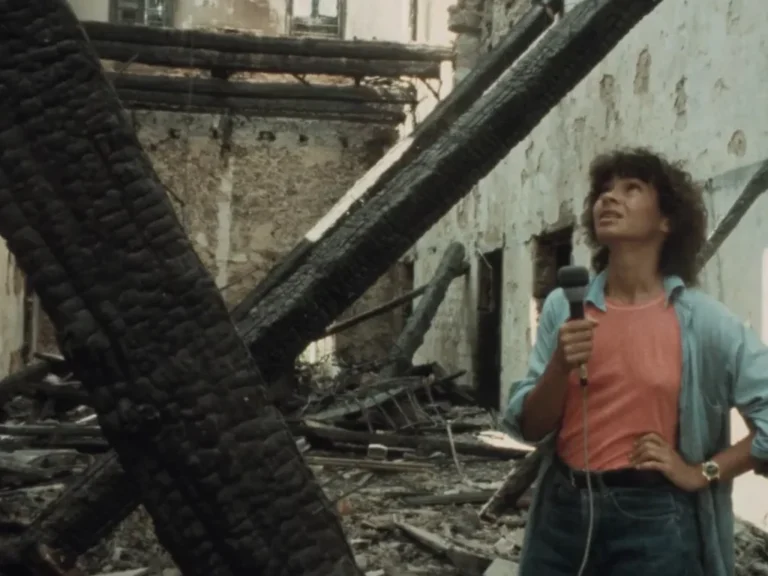
Lebanon’s conflicts keep returning to the foreground, but Jocelyne Saab’s Beirut trilogy returns with renewed urgency. Saab blends documentary immediacy with intimate memory to chart a city where daily life persists even as the rubble piles up. Critics have noted a shift in early Arab cinema after 1967, a move from outward assertion toward a more personal, reflective realism in times of upheaval.
Beirut’s three films in dialogue
Beirut, Never Again (1976) opens on the crackle of gunfire and a city under siege, then unfolds a quiet, elegiac portrait of a place in flux. The camera follows people through chaos, letting children paddle in polluted water while adults brace against the new normal. Frames sit with a juxtaposition of beauty and ruin, while voices and images test the line between memory and loss.
A Letter from Beirut (1978) follows Saab as she rides the buses and crosses the city’s divided lines, letting ordinary conversations reveal the war’s many fractures. People speak of neighborhoods now unreachable, of homes lost to shelling, of disappearances, and of a stubborn attempt to keep life moving despite the risk of violence.
Beirut, My City (1983) deepens the mood, pairing documentary observation with a premonition of the violence still to come. The footage predates the Sabra and Shatila massacre but arrives in its aftermath, so every image feels haunted by what is looming and what has already happened. The trilogy binds past, present, and prophecy in one sustained gaze.
Across the three films, Saab treats routine acts—boarding a bus, sharing a moment with a friend, tending a street corner—as acts of memory and resistance. The films insist on clear moral accountability, while also showing how ordinary bonds endure even under bombardment and displacement. In this light, history seems to chase itself, repeating pain even as it seeks a future beyond it.
Now, in 2026, the echoes Saab captured still resonate as new conflicts unfold across the region and beyond. The work remains a political gesture as much as a record of everyday life, naming oppressors and honoring solidarity in the face of devastation. The question Saab raises lingers: what comes after might simply intensify what came before, unless human connection holds fast.
When people ask how communities survive such upheaval, Saab’s protagonists answer with a quiet, stubborn vitality: life goes on, even as the city bears its scars and search for a new horizon persists.
Source: Original article