
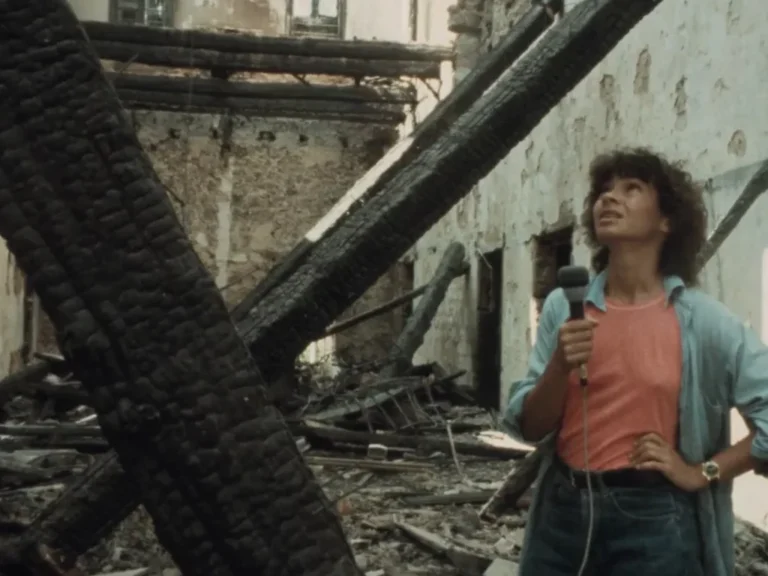
In the shadow of ongoing regional conflict, Jocelyne Saab’s Beirut Trilogy returns with a clear, stubborn insistence that memory and the news of the day belong to the same filmic conversation. Saab, born in Beirut and long based in Paris, used documentary and personal observation to map Lebanon’s upheaval across three films from the late 1970s into the 1980s.
The trilogy begins with Beirut, Never Again (1976). It opens on dissonant sounds and the wreckage of a city, while a narrator salutes a Beirut that time has rewritten. The film captures a longing for the city’s former glow, juxtaposed with a landscape of ruined buildings and a sense of loss.
A Letter from Beirut (1978) moves through ordinary moments that survive amid disruption. Saab follows people on public buses, letting their conversations reveal the borders and divides shaped by war. Homes vanish, families endure, and stories about kidnapping and displacement echo through the journeys across the city.
Beirut, My City (1983) expands the lens to show how civilians carry on amid bombardments and flight. The footage was shot before the Sabra and Shatila massacre but released after it, casting every image with the weight of what came next. The trilogy suggests that the future’s horror haunts the present, linking past devastation to new cycles of violence elsewhere in the region.
Viewed today, Saab’s films feel like history chasing itself—past horrors mirrored by contemporary conflicts in Gaza, Iran, and Lebanon. The camera bears witness not only to suffering but to moments of connection: a bus driver embracing a passenger, a shared hope for a better tomorrow even as the streets remain dangerous. Saab’s work remains a political act, insisting that oppression is legible and that human bonds can persist despite ruin.
Through its relentless interrogation of violence and resilience, the Beirut Trilogy asserts that cinema can endure as a space for memory, empathy, and accountability—and it asks us what responsibility looks like when history keeps circling back to repeat itself.
Source: Original article